Meetings in Skopje
Von der Leyen held bilateral talks with Prime Minister Hristijan Mickoski, President Gordana Siljanovska-Davkova and Foreign Minister Timčo Mucunski. According to the European External Action Service, the agenda covered the accession pathway, gradual integration into the single market, and the steps needed to open the fundamentals negotiating cluster. She repeated that the EU recognises Macedonian identity, language and culture.
The fundamentals cluster has not been opened yet. It comes first in accession negotiations and covers the rule of law, the judiciary and public administration. Until it opens, the other chapters stay parked.
Money already disbursed
North Macedonia has received €140 million under the EU Growth Plan for the Western Balkans, a €6 billion instrument that covers the whole region. The plan is built to give candidate countries parts of the single market before membership rather than after it.
The clearest result so far is payments. Since North Macedonia joined the Single Euro Payments Area, transaction costs there have fallen by more than 90%. The European Commission estimates that SEPA participation saves businesses across the Western Balkans region as a whole around €500 million a year. For a small studio in Skopje invoicing a client in Vienna, that is the difference between a bank fee eating the margin and keeping it.
The AI Factory Antenna
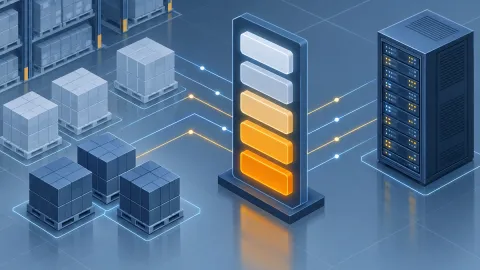
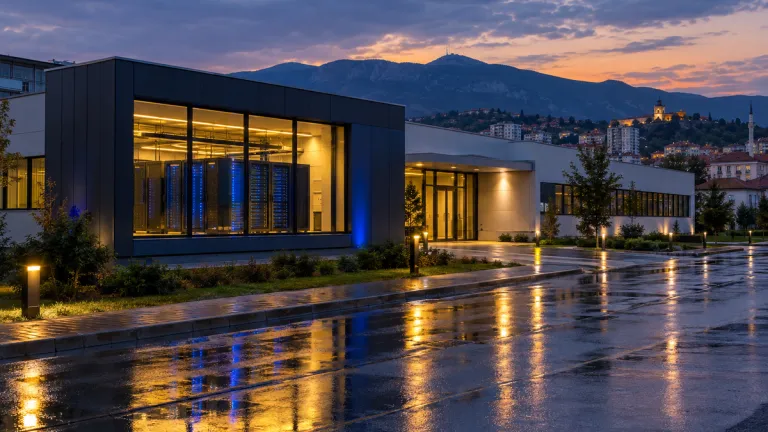
Less visible is VEZILKA, an AI Factory Antenna in Skopje. Its stated purpose is to give researchers and companies in the country direct access to the EU's artificial intelligence infrastructure. The EU has been assembling AI Factories, clusters of GPU capacity and support services for startups, small firms and researchers, coordinated through the EuroHPC Joint Undertaking. Antennas are access points linked to AI-optimised supercomputers in existing or planned AI Factories, and they are not limited to countries outside the bloc: of the 13 antennas selected, seven are in EU Member States (Belgium, Cyprus, Hungary, Ireland, Latvia, Malta, Slovakia) alongside partner countries (Iceland, Moldova, North Macedonia, Serbia, Switzerland, UK). The Commission's own description of the programme sits on its digital strategy pages.
Compute is the expensive part of building anything with AI. Renting GPU hours from a commercial cloud scales badly for a team of three people working on a grant of a few thousand euro. Shared European capacity does not make training free, but it changes who is allowed to apply. The antenna is meant to put North Macedonian teams into the same queue as teams in Portugal or Estonia.
How access is allocated will matter more to most companies than the announcement itself. A research group with an established project will find a route through the programme; a two-person startup looking for weekend GPU time may not.
Rules that come with the market
General-purpose AI providers have been bound by the EU AI Act's transparency duties since 2 August 2025, and companies using AI have had to ensure staff AI literacy under Article 4 since 2 February 2025. The 2 August 2026 date, by contrast, brings the Article 50 transparency and labelling rules for AI-generated and synthetic content, plus the bulk of the obligations for high-risk AI systems. The European AI Office and national authorities hold enforcement powers.
This already reaches Skopje. A company there selling AI-generated images, audio or text into the EU market falls under the same labelling duties as a company in Berlin. GDPR applies too, whenever personal data of people in the EU is processed. Market access and regulatory alignment arrive together, and the second part is the one that costs money to implement: documentation, staff training, a named person responsible for compliance.
Full membership would extend the whole framework to public authorities as well, including the parts that govern how AI systems are used in hiring, education and policing. Candidate countries typically start adapting their legislation years before they join, because the Commission assesses alignment chapter by chapter.
The Bulgarian question
After the meetings, Mickoski directed Foreign Minister Mucunski to send an official diplomatic note to Bulgaria proposing bilateral talks on the constitutional disputes that have blocked accession negotiations. That is the only concrete follow-up from the visit.
The antenna in Skopje does not depend on the fundamentals cluster, and neither does the Growth Plan money. The political track, which decides how much of the rest arrives and when, is waiting on a reply from Sofia. Von der Leyen's stop in Skopje was the last of this year's Western Balkans tour.
Does the AI Factory Antenna in Skopje mean free GPUs?
No. It is an access point to shared European AI infrastructure, and projects are selected through the programme that runs it rather than handed capacity automatically. What has been announced is the antenna and its purpose, not a number of reserved GPU hours.
Do North Macedonian companies have to follow the EU AI Act now?
Only when their products or services reach the EU market. A firm there selling AI-generated content or AI tools to customers in the EU has the same transparency and labelling duties as an EU-based firm. Services offered purely inside the country fall outside that scope.
Is SEPA membership tied to joining the EU?
No. North Macedonia is part of the Single Euro Payments Area without being a member state, which is why the cheaper cross-border payments are already in place while the accession talks remain stuck.