What Logistics Reply announced
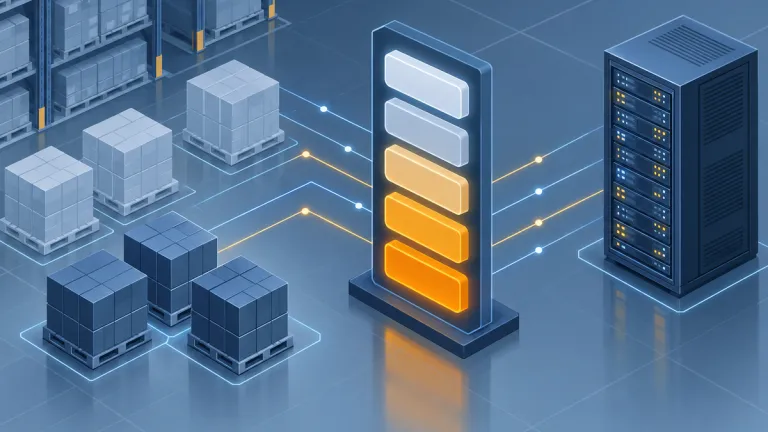
Logistics Reply describes the LEA AI Agent Authority Model as a 5x4 grid: five contextual authority levels crossed with four stages of organizational AI maturity. The levels are Inform, Recommend, Act, Coordinate and Governed Autonomy. The company says the design draws on more than 30 years of supply chain execution work inside the group.
The names point at a ladder. An Inform agent surfaces data and stops. A Recommend agent proposes a step and waits for confirmation. Act means completing a defined task inside guardrails. Coordinate suggests several agents or systems working on the same process. Governed Autonomy sits on top, where a workflow runs end to end with monitoring and escalation paths. Reply's public material does not spell out the permission boundary for each rung, so treat those descriptions as what the labels imply rather than a published specification. Anyone evaluating this should ask for the escalation rules in writing before trusting the top level with a live warehouse.
The second axis is maturity. A company that has never automated a pick path and one already running predictive replenishment do not need identical permissions. Handing an agent maximum autonomy on day one is the failure mode this grid is meant to make visible.
Alongside the framework, Reply released five pre-built agents for warehouse execution plus an agent builder for custom agents that operate inside defined task guardrails. The platform itself, LEA Reply Dynamic Intelligence, is a rebrand and update of the former GaliLEA. There is no public list pricing; Reply sells through enterprise quotes, which makes a total-cost comparison against Microsoft, Salesforce or ServiceNow agent tooling hard to run without a procurement conversation.
The numbers in the announcement
Reply cites four figures. Return mismatches resolved with 100% accuracy in under 15 seconds. Up to one hour of manual work saved per worker per day. 30% faster support ticket resolution and a 20% drop in training-related support requests.
No sample size, test window or methodology accompanies those numbers, and they come from the vendor. The 100% figure is the one to treat with the most caution: perfect accuracy on a mismatch-resolution task usually means the test set was narrow and the exception cases were filtered out beforehand. That does not make the claim false. It makes it unverified. A pilot with your own return data is the only way to find out whether a European distribution centre sees the same 15 seconds.
What an hour per worker per day is worth
Reply's own figure is the easiest to convert into money. One hour per worker per day, at roughly 220 working days a year, is about 220 hours per worker annually. At a fully loaded cost of €22 per hour, a placeholder you should replace with your own wage and social contribution figure, that lands near €4,800 per worker per year. A 50-person shift, fully covered by the agents, would be a six-figure sum on paper.
Two caveats. Saved hours only become savings if they turn into extra output, fewer temporary contracts or reduced overtime; in many warehouses they turn into slack absorbed by the shift plan. And exception handling is real work: an agent that resolves the clean cases pushes the messy ones to the same people who used to handle everything.
Inference cost is a rounding error next to that. Using current frontier pricing of roughly $2.00 per million input tokens and $10.00 per million output tokens, a return-mismatch task that reads 20,000 tokens of order and inventory context and writes 3,000 tokens of resolution costs about $0.07. Fifty such tasks a day over 250 working days comes to roughly $875 a year in model calls. Reply's platform fee, not the tokens, is where the budget goes.
The European angle: who is actually selling this
Reply S.p.A. is headquartered in Turin, and LEA Reply deployments sit mainly in European logistics and manufacturing. That matters for two practical reasons. First, data residency: warehouse execution agents touch order, inventory and worker performance data, so the hosting region and processor terms are worth pinning down before signature.
Second, the EU AI Act. An AI system used for task allocation or for monitoring worker performance falls under Annex III as a high-risk use in employment and worker management. Under Regulation (EU) 2026/1744, the Digital Omnibus on AI, the compliance deadline for those obligations moved to December 2027. Transparency duties under Article 50 are already binding, with enforcement by the EU AI Office and national market surveillance authorities active since 2 August 2026. An authority ladder is a governance pattern, not a compliance certificate. Buyers still need the risk classification, logging retention period and human-oversight design documented.
On our own side, we run local models in AI Arena on a 16 GB RTX 5060 Ti. That class of card serves mid-size open-weight models fine, but not frontier ones, so the idea of running an agent fleet entirely on-premise in a warehouse remains a hardware and maintenance decision, not a download.
What is still missing
Two things would make this easier to judge. Independent benchmarks on real warehouse data, and pricing that a mid-size European 3PL can compare without a sales cycle. Until both exist, the LEA Authority Model is a sensible naming scheme for a problem every agent deployment hits, published by a vendor whose own performance claims have not been reproduced outside its customer base. The five agents and the grid are available now; the evidence is not.
Does Reply publish prices for LEA Reply Dynamic Intelligence?
No public list price was released on 5 October 2026. Logistics Reply sells enterprise licences through quotes, so the framework's cost depends on deployment size, the number of agents and the integration work in your warehouse management system.
Is "Governed Autonomy" the same as fully unsupervised operation?
The label is the top of Reply's five-level scale, but the company has not published the exact permission boundary for that level. Ask for the escalation rules, the monitoring setup and the audit log format before letting an agent close a process without a human check.
Does using the Authority Model make a warehouse AI Act compliant?
No. The model is a way to decide how much authority an agent gets. Compliance is a separate exercise: classification under Annex III for employment-related uses, a data protection impact assessment under GDPR if worker data is processed, and documented human oversight. Those obligations for high-risk employment systems now run to December 2027.