What the decommission involved
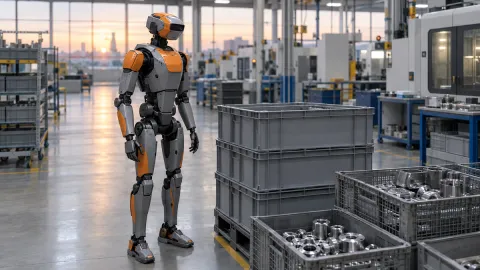
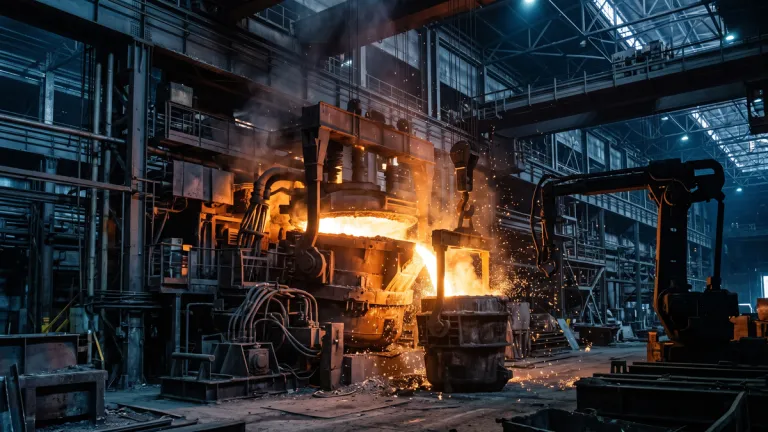
Figure AI stopped supporting the F.02 platform as it scales up Figure 03 and works on F.04. The old units had to go somewhere. Taking them apart by hand would have tied up engineers the company wanted on newer machines, so the fleet was sent to a steelworks in southeastern Finland. An electric arc furnace there does what such furnaces normally do: it turns scrap into new steel. The unusual parts are the autonomy and the camera crew. IBM's account of the event describes robots trained to enter the furnace under their own control.
The numbers Figure published
Before retirement, the F.02 fleet logged more than 1,250 operational hours, handled more than 90,000 parts and worked on more than 30,000 BMW vehicles. Divide the parts by the hours and you get about 72 parts per hour. The vehicles work out to roughly 24 per hour. Those are fleet totals, not per-robot figures. Figure has not published how many F.02 units existed, so the load on an individual robot cannot be derived from these numbers.
For the destruction itself, the published figures are a 75-ton furnace, a 24-hour window and six melting cycles of about 20 minutes. Six cycles of 20 minutes adds up to two hours of melting inside a 24-hour operation. Staging, cooling and handling filled the remaining time, and the source material does not break that down.
IP protection and the second-hand market
Two reasons are given for choosing the furnace over a screwdriver. The first is time: engineers disassemble old hardware slowly, and those engineers were needed elsewhere. The second is intellectual property. Hardware that leaves a company intact can be photographed, measured, reverse-engineered or resold. Molten steel can be measured by nobody.
There is a gap in that logic worth naming. Melting a chassis destroys the metal, not the telemetry. Operational logs, firmware images, sensor recordings and model checkpoints live on servers. For European companies running similar machines, decommissioning therefore splits into two separate jobs: physical disposal and data retention. Destroying the robot is not a documented answer to the second one.
The Helix 2.5 result behind the stunt
The technical number in this story sits behind the video. Figure reports a 56% full-task success rate across 30 unfamiliar homes when Helix 2.5 pretraining was used, against 9% without it. That is roughly a sixfold improvement, and it matches the pattern pretraining usually produces in robotics: skills that carry over into a kitchen nobody has mapped yet.
The absolute figure matters more than the ratio. A 56% full-task success rate in an unfamiliar home means roughly half the tasks still needed a human. Unfamiliar is the operative word: the published comparison does not include a success rate for homes the model saw during pretraining, so the size of the home-field advantage is not in the material. That pretrained-versus-task-specific gap is the kind we keep running into on our AI Arena rig, where the ceiling is a 16 GB RTX 5060 Ti and the unit of measurement is tokens per second rather than door handles.
A Finnish furnace and US-priced souvenirs
The melting happened inside the EU. Imatra is in southeastern Finland, and an electric arc furnace there operates under Finnish and EU industrial permitting. Figure has not published the energy consumption or the emissions of the melt. What it did publish is where the steel went: back to the US, where it was cast into limited-edition figures at $1,900 each. In euros that is under €2,000 at recent exchange rates, before shipping. A figure ordered into Czechia would add 21% import VAT and the carrier's customs handling fee. The published material does not say whether Figure ships the memorabilia outside the United States.
AI Act obligations after decommissioning
Since 2 August 2026, the European Commission and the EU AI Office can run technical evaluations on general-purpose AI providers and fine them up to 3% of global annual turnover or €15 million. That changes the paperwork around any European deployment built on a model that later disappears from the market. When a vendor retires a platform, the compliance file does not retire with it. Companies that buy humanoid platforms should keep the vendor documentation that was valid while the system was in service, plus a record of which model version was actually deployed and when. This is a practical reading of the rules, not legal advice.
What Figure did not publish
The released material covers the melt, the memorabilia and one transfer-learning comparison. It leaves out the size of the F.02 fleet, the energy used in Imatra and a success rate for homes the model had already seen. Those three gaps are the parts of the story that cannot currently be checked.
How many Figure 02 robots were destroyed?
Figure has not disclosed the fleet size in the material published around the decommission. The released figures cover operational hours, parts handled and vehicles worked on, not unit counts.
Can I buy the memorabilia from Europe?
The published material says the recovered steel was shipped to the US and the figures are priced at $1,900. It does not state whether orders outside the United States are accepted. An EU order would in any case carry import VAT and customs handling on top of the item price.
Did the robots really walk into the furnace themselves?
That is Figure's framing and the basis of the Terminator comparison: the company says the F.02 units were trained to enter the furnace autonomously, rather than being hoisted in or dismantled first. The published video shows the process, though the source material does not describe how much of each unit's approach was scripted in advance.