Why Meta is suddenly shipping "personal superintelligence"
Meta's post-Llama era has a name: Muse. At the launch of the new model family, Mark Zuckerberg unveiled Muse Glimmer, a dense 30B open-weight model that Meta says is built for agentic AI tasks on personal computers rather than centralized data-center clusters. The announcement came with a manifesto, "The Future is for Everyone" — about 6,500 words across 14 pages — in which Zuckerberg argues that AI should become something people own and run themselves, not something they rent from cloud providers.
The framing is deliberate: "personal superintelligence." Instead of sending your prompts to a data center, the model lives on your hardware, works on your tasks, and your data never leaves the machine. That is a genuinely different pitch from what OpenAI, Anthropic and Google are selling with GPT-5.6, Claude Opus 5 and Gemini 3.7 Flash — all proprietary, cloud-hosted models. Meta is betting that local, open-weight, agentic AI is the next big product category, and it is backing that bet with its full ecosystem weight.
The hardware math: can one GPU really run 30B?
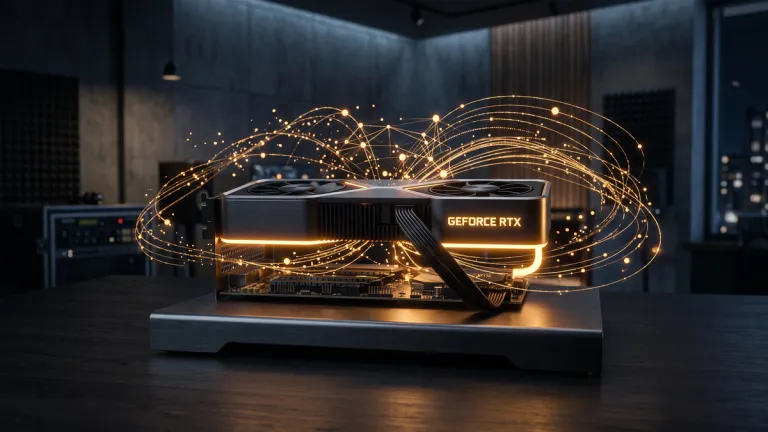
Meta claims Muse Glimmer runs on one graphics card on a PC or Mac. That claim deserves scrutiny, because "runs on one GPU" can mean many things. The arithmetic is straightforward: a 30-billion-parameter dense model needs about 60 GB of memory at FP16 (2 bytes per parameter). That is not one GPU — that is two or three high-end data-center cards. At 8-bit quantization it drops to roughly 30 GB, and at 4-bit to about 15–17 GB plus overhead for the KV cache and agent scaffolding.
That means a 4-bit Muse Glimmer fits on a 16 GB card like the RTX 5060 Ti in our AI Arena benchmarking rig — barely, with tight context windows — and comfortably on 24 GB cards or Macs with generous unified memory. Users with older 8 GB laptops are out of luck; they will either face heavily degraded context or have to wait for Muse Spark 1.2, the higher-tier model whose open weights Meta says it will release in the coming weeks.
We have not benchmarked Muse Glimmer in AI Arena yet — it just landed — so I will not quote tokens-per-second numbers we did not measure. But the hardware category is clear: this is a model designed for the 16–24 GB segment that local LLM users actually own. That is exactly the segment that made Llama 3 and Mistral models popular, and it is the same segment where DeepSeek-V4-Flash-Vision-Exp (MIT-licensed) and Zhipu's GLM-5.3 (also MIT) already compete aggressively.
"Agentic on-device" — the reality check
There is a difference between running a model and running an agent. A model generates tokens; an agent plans, calls tools, reads files, searches the web, and decides what to do next. Meta's "agentic AI on one GPU" marketing glosses over the fact that the model is only one component of the stack. A local agent loop also needs tool-calling infrastructure, memory and retrieval, and a way to manage context across long tasks — all of which consume additional VRAM and CPU cycles on the same machine.
From our production experience with AI pipelines at ai-jarvis.eu, the practical bottleneck in local agentic setups is rarely the model itself; it is the scaffolding. Getting a 30B model to run is solved science. Keeping a 30B model running through a multi-step agent task with context that grows every turn — that is where the real engineering starts. The good news: with 30B parameters, you still run close to interactive speeds on consumer hardware, unlike the 70B+ class models where quantization degrades quality noticeably.
Meta has not published an independent agentic benchmark for Muse Glimmer in the materials we could verify — the announcement coverage focuses on the model's size and local-runtime promise, not measured agent performance. The "one GPU" claim likely refers to the weight footprint, not the entire agent stack. Treat it as a model you can run locally, not as a complete auto-pilot you install and forget.
Zuckerberg's political bet — and the EU AI Act collision
Muse Glimmer is as much a political statement as a technical product. Zuckerberg's essay urges the U.S. to keep light regulatory burdens on open-weight AI to stay competitive with Chinese developers — a direct reference to the wave of MIT-licensed Chinese models (DeepSeek, GLM, and others) that have reshaped the open-weight landscape. Meta has also put money where its lobbying is: a $1 billion community fund to address backlash over its data-center expansion, and an active policy push against restrictions on open-weight software distribution after the June 2026 U.S. executive order introduced voluntary national-security reviews for frontier models.
For European readers, this is where the story gets concrete. The EU AI Act's general-purpose AI obligations are now binding and enforced, not voluntary. Providers placing general-purpose models on the EU market must maintain mandatory technical documentation, copyright compliance policies, public training-content summaries, and — for high-capacity models — systemic risk evaluations. Chapter V obligations apply regardless of whether the weights are open or closed. Article 50 requires machine-readable watermarking and explicit disclosure for AI-generated content. Article 4 requires any EU provider or deployer to ensure staff handling AI systems receive verifiable AI literacy training.
In practice: downloading Muse Glimmer in the EU is legal — the open weights were made publicly available — but building a product on it is not a regulation-free zone. If you deploy it in a high-risk context (hiring, credit, biometrics), the full conformity framework applies, including EU database registration. If you distribute AI-generated content, it must be disclosed and watermarked. And if your company uses it internally, Article 4's literacy obligations apply to your team. None of this makes local open-weight AI unattractive — quite the opposite.
The GDPR angle nobody is marketing
There is one European advantage Meta probably did not put in its manifesto: on-device inference is a data-residency story. A 30B model running locally means your documents, conversations and agent tasks never hit a U.S. data center. For EU companies bound by GDPR and wary of transatlantic data transfers, that removes a whole class of compliance risk at the source. This is a legitimate selling point Meta has not led with, and European developers should weigh it when comparing a local Muse Glimmer setup against API-based alternatives like Grok 4.6 (from $2 per million input tokens and $6 per million output tokens) or DeepSeek's Flash tier ($0.14 / $0.28 per million tokens).
Muse vs. the field: the numbers
| Model | Released | Format | Where it runs | Price |
|---|---|---|---|---|
| Muse Glimmer | Now | 30B dense, open weights | 1 GPU locally | Free weights |
| Llama 4 Scout / Maverick | Apr 2025 | Open weights | Local / cloud | Free weights |
| GPT-5.6 (Sol/Terra/Luna/Cyber) | Jul–Aug 2026 | Proprietary | Cloud API | ChatGPT subscription |
| Claude Opus 5 | Jul 2026 | Proprietary | Cloud API | Paid Claude tiers |
| Gemini 3.7 Flash | Aug 2026 | Proprietary | Cloud API | Free tier + pay-as-you-go |
| Grok 4.6 | Aug 2026 | Proprietary | Cloud API | From $2 / $6 per 1M tokens |
| DeepSeek-V4-Flash-Vision-Exp | Aug 2026 | MIT weights | Local / API | $0.14 / $0.28 per 1M tokens |
| GLM-5.3 | Aug 2026 | MIT weights | Local / API | Usage-based |
The strategic picture is clear: Meta is trying to own the "local agentic AI" category the way it tried to own open-weight LLMs with Llama. Muse Glimmer is a credible entry — 30B dense is a sensible size for consumer hardware, and the open weights make it immediately available for European developers to test and fine-tune. But the gap between "runs on one GPU" and "productive local agent" is still measured in engineering hours, and the EU regulatory frame is no longer optional for anyone who builds on top.
What to watch next
Muse Spark 1.2 — the higher-tier model in the Muse family — is the one that will test whether Meta can scale "personal superintelligence" beyond the local-GPU segment. Its open weights are promised for the coming weeks. For now, developers in the EU should treat Muse Glimmer as a promising local reasoning model with a political campaign attached: test it, measure it, and remember that in the EU, open weights were never a synonym for unregulated.
Does "open weights" mean Muse Glimmer is fully open-source like MIT-licensed models?
No. Open-weight means the trained model parameters are publicly downloadable and customizable. It does not necessarily include training data, datasets, or full training code — which distinguishes it from genuinely MIT-licensed releases like DeepSeek's Flash models or Zhipu's GLM-5.3.
Can my 8 GB laptop run Muse Glimmer?
Realistically no. A 4-bit quantized 30B model needs roughly 15–17 GB of memory before adding context and agent scaffolding, so plan for a 16 GB card with aggressive quantization, or ideally 24 GB or a Mac with large unified memory. CPU-only inference would be painfully slow for agentic workloads.
Do EU companies need a licence or approval to download and use Muse Glimmer?
Downloading open weights does not require approval. But under the EU AI Act, deployers still have binding obligations: AI literacy training for staff (Article 4), transparency and watermarking for AI-generated content (Article 50), and the full high-risk conformity framework if you use the model in employment, credit, biometrics or similar areas.