A trade case worth understanding
Anti-dumping sounds like jargon from a customs manual, but the principle is simple. When a foreign producer sells a product in the EU below its normal value — the price charged in the producer's home market or a constructed value — to gain market share, European law allows the Commission to impose a duty that levels the playing field. The idea is to give European industry a fair chance, not to block trade.
Chinese silicon metal has been under such measures for years. What changed now is that the European industry association Euroalliages, which represents producers of alloys and silicon, asked Brussels to take another look. On 8 July 2026 it filed a request for an interim review. In that request, Euroalliages argued that Chinese production overcapacity has grown and export prices have fallen. The Commission examined the evidence, agreed it was sufficient, and formally opened the proceeding on 1 September, as reported by the Digital Watch Observatory.
What exactly is under investigation
An interim review is not a new case from scratch. It re-examines whether the original reasons for the duties still hold. Specifically, the Commission will look at two things:
- Dumping — are Chinese exporters still selling silicon metal into the EU at prices below normal value?
- Material injury — is the European domestic industry still being harmed by those imports, or has the situation changed?
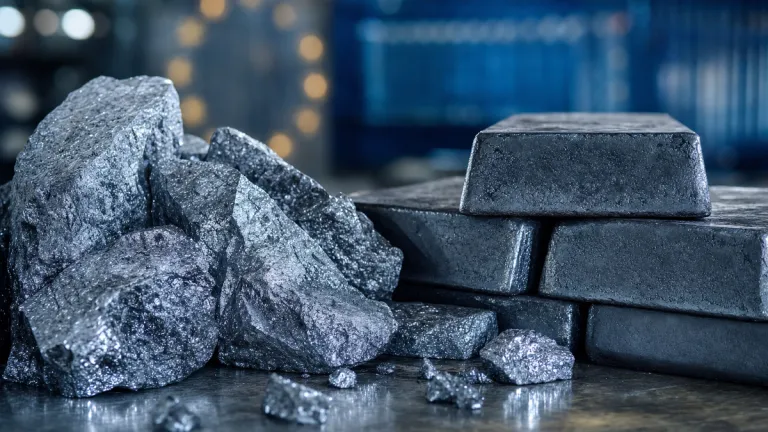
According to the Commission notice, the investigation covers market data and transactions from July 2025 to June 2026, and the affected product falls under CN code 2804 69 00 — this is metallurgical-grade silicon, where the silicon content is below 99.99 %, not the ultra-purified silicon used directly in chip fabrication.
For the duration of the review, importers keep paying the current duties, which range between 16.3 % and 16.8 % of the value of the imported goods. At the end of the process, Brussels can keep the duties as they are, raise or lower them, or let them expire. The outcome is genuinely open.
Why silicon metal should interest anyone who follows AI
Silicon metal rarely makes headlines — silicon chips do. Yet chips are only the glamorous end of a long industrial chain. Metallurgical-grade silicon is the first purified form of the element, produced in electric arc furnaces at very high temperatures. Some of it goes to solar-grade polysilicon for photovoltaic panels. Some is upgraded further towards the semiconductor-grade material used in electronics.
That matters because Europe's ambitions in AI — the EU AI Factories, the Chips Act, the drive for sovereign compute — rest on more than good algorithms. They rest on physical supply chains: energy, wafers, rare materials and, at the base, the unglamorous commodity silicon. If Europe cannot produce or buy this input at fair prices, its technological independence could remain fragile.
The review should also be read in a broader context. Over the past year, Brussels has moved from voluntary AI commitments to binding obligations under the AI Act, and it has pushed for sovereign cloud and compute infrastructure. Trade defence is part of that same mindset — protecting the industrial base that a digital power needs. Whether this particular review says much about wider dependence on Chinese materials will depend on the evidence gathered, but it fits into a policy conversation that is already paying more attention to supply risks in basic materials.
The balancing act Brussels faces
There is a genuine dilemma underneath the legal language. Higher duties protect European producers — and the skilled industrial jobs that go with them — but they can also raise input costs for European downstream users. Silicon metal is an ingredient; somebody further down the chain pays for it.
European aluminium smelters, chemical companies and solar manufacturers have an interest in cheap imports. Euroalliages and its member companies have an interest in prices that keep furnaces running profitably in Europe. The Commission's job in Case R869 is to weigh the evidence from both sides, using the July 2025–June 2026 data. That is also why the review period matters: export prices that dropped during those twelve months will be the key test of whether Chinese producers are genuinely dumping or simply competing hard.
What happens next
No quick verdict is coming. The Commission will send questionnaires to known producers and exporters, analyse the data, and allow interested parties to comment. In the meantime, the current duties remain the law. For European buyers, the practical message for now is "no change" — the price of Chinese silicon metal will not suddenly jump this month because of this review.
The longer-term signal is more interesting. By initiating an interim review of existing anti-dumping measures, Brussels is telling both Beijing and European industry that it takes metal supply seriously. Whether that results in a tariff change will depend on hard numbers, not politics. But the very existence of the review shows how close the connection between raw materials, energy policy and digital sovereignty has become. For a continent that wants to build its own AI future, that connection is worth watching.
What is silicon metal actually used for?
Silicon metal is a refined raw material used mainly in aluminium alloys, silicones and chemical production. After further purification it also feeds into solar-grade and semiconductor-grade silicon, which links it to photovoltaics and electronics.
Will the anti-dumping duties apply during the review?
Yes. The existing definitive duties of 16.3 % to 16.8 % remain in force while the interim review is carried out. Importers should not expect any immediate change.
Who asked for this review and why?
Euroalliages, the European association representing alloy and silicon producers, filed a request on 8 July 2026. In its submission it said Chinese overcapacity had grown and export prices had fallen. The European Commission found the evidence sufficient and launched the review on 1 September 2026, covering market data from July 2025 to June 2026.