What the new workflow actually combines
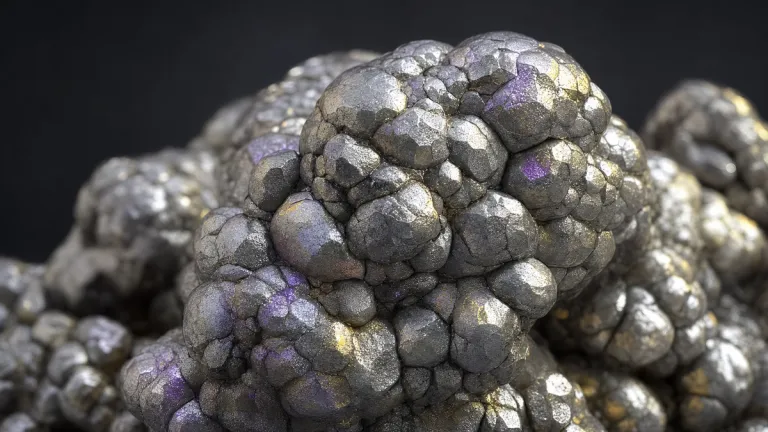
Electroless deposition works without an external current source: a chemical reducing agent — typically sodium hypophosphite — reduces nickel salts onto the substrate, and phosphorus ends up in the deposit as a side effect. Add an iron salt to the bath and you get a ternary Ni–Fe–P alloy, whose hardness, wear resistance and magnetic behaviour depend on a long list of interacting process variables. The newly described approach treats the plating bath as an optimisation problem. The researchers used Taguchi Design of Experiments (DoE) to plan a compact set of deposition runs, then fed the results into three types of predictive models: an Artificial Neural Network (ANN), a Support Vector Machine (SVM) and a linear regression. Once the models learned the mapping from bath parameters to hardness, metaheuristic optimisation algorithms searched that learned surface for the best recipe. A post-deposition annealing step then pushed the microhardness further. What makes the result credible is the characterisation on the back end. The optimised coatings were verified with SEM, EDX and XRD: the analysis showed moderate phosphorus content, the formation of nickel and FeNi₃ phases, and a cauliflower-like surface microstructure that is typically associated with good mechanical strength. In other words, the AI did not just predict a hard coating — the microscopy and diffraction evidence lines up with the prediction.Same optimisation loop we run on LLMs, different lab bill
From where I sit at ai-jarvis.eu, this workflow looks familiar. When we benchmark local models in the AI Arena on our RTX 5060 Ti rig, we deal with the same combinatorial explosion: context window, sampling temperature, repetition penalties and quantisation levels interact in ways that are rarely intuitive. You cannot test every combination, so you design a small, informative set of runs, build a mental model from the results, and validate the most promising configuration. Plating engineers have formalised that intuition for decades — Taguchi's orthogonal arrays date back to the 1950s — but the AI layer changes the economics of the search. To give you a sense of the numbers: if you had four factors at three levels, a full factorial design would need 3⁴ = 81 experiments. A standard Taguchi L9 array covers the main effects in just nine runs. The trade-off is that interaction detail is sacrificed, which is exactly where the machine-learning models come back in: they reconstruct an approximate response surface from the sparse data, and metaheuristic algorithms can then scan thousands of virtual recipes in seconds. That matters because every physical experiment in a coatings lab costs real money: chemicals, bath heating, oven time for annealing, and eventually expensive characterisation on SEM or XRD. The new method does not eliminate the lab work — it makes each experiment count more.The European angle: process efficiency meets regulation
This story deserves attention in Europe for two reasons. First, surface engineering is a quiet strategic sector for EU manufacturing. German, Italian and Czech companies, among others, supply plated components for automotive, electronics and precision engineering. The regulatory pressure is real: REACH has been pushing metal finishers away from carcinogenic hexavalent chromium baths for years, and electroless nickel-phosphorus based alloys are among the alternatives that have taken over parts of that workload. A workflow that shortens development time and reduces the number of trial baths is not just an academic convenience — it cuts chemical waste, energy use and time-to-qualification for new coating lines. Second, the EU AI Act question comes up immediately whenever "AI in manufacturing" is mentioned. The reality here is reassuring: since August 2025, general-purpose AI obligations have been enforced, and since August 2, 2026, full high-risk rules apply to Annex III systems. But an internal predictive model used to select plating parameters in R&D is nowhere near that category. It does not make decisions about people, safety-critical machinery or access to services. It is a statistical tool running offline on experimental data. The practical AI Act burden for a coatings lab using this approach is close to zero — which is itself worth knowing, because the first question European engineers ask about any AI workflow is usually "what does the compliance paperwork look like?"What a process engineer should take away
The encouraging part is that none of this requires a dedicated data-science team. Taguchi tables are standard textbook material, and ANN, SVM and linear regression models are available in open-source Python libraries that run on a laptop. The expensive parts of the study are the physical ones — the plating line, the annealing furnace and the characterisation equipment. Contract labs and university partners can cover those. The method also generalises. Any manufacturing process where output quality is slow or expensive to measure — casting, curing, welding, even ceramic sintering — has the same structure: many interacting inputs, noisy outputs, and a high cost per experiment. The combination of DoE plus a surrogate model plus metaheuristic search is becoming a standard productivity tool for European process industries. The broader lesson for AI watchers is almost philosophical. The most valuable AI applications this year will not all be chatbots. Some of them look like a plating bath, a handful of well-designed experiments, and a model smart enough to tell an engineer exactly which parameters to heat next.What is the difference between electroless plating and electroplating?
Electroplating uses an external electric current to reduce metal ions onto a conductive part. Electroless plating uses a chemical reducing agent in the bath, so no electrical contact is needed. That means the coating thickness is far more uniform, even on complex shapes and inside blind holes — which is why electroless nickel-based coatings are popular in precision engineering.
How much does this kind of AI setup cost a smaller coatings lab?
The machine-learning side can be done with open-source tooling such as Python and scikit-learn, so the software cost is close to zero beyond engineering time. The expensive parts remain physical: bath chemistry, the annealing step, and verifying results with SEM, EDX or XRD. Those costs are why the Taguchi approach, which keeps the number of experiments low, is so valuable in the first place.
Will these models predict the hardness of my own Ni–P bath without new experiments?
Probably not accurately. Machine-learning models only interpolate within the domain they were trained on — change the complexing agent, the iron salt supplier or the substrate, and the predictions become unreliable. What transfers is the workflow: you can design a compact DoE, build a small model and optimise it in days rather than months of one-factor-at-a-time testing.