What the rig actually ran
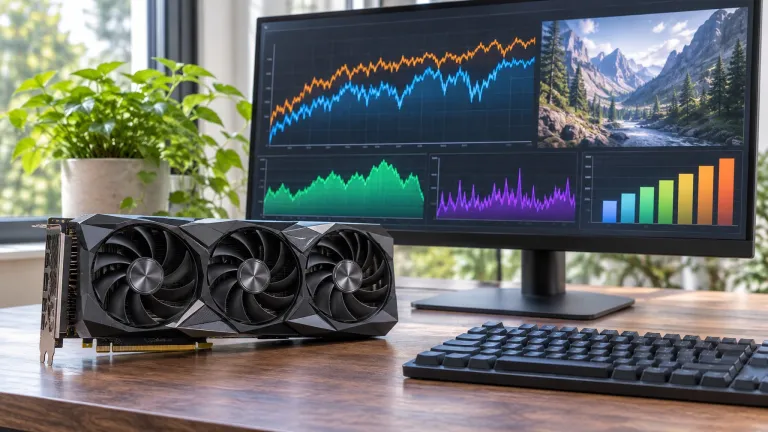
Every Saturday our AI Arena rig – an NVIDIA RTX 5060 Ti with 16 GB of VRAM – runs the same four tests against local Ollama models and cloud APIs: a PHP Drupal module, an HTML/JS animation, a Python "galaxy" rendering, and an English article. We log tokens-per-second, time-to-first-token, total duration and token counts.
This week's fresh batch contained four runs, and all four came from a single model – DeepSeek V4 Pro in the cloud. Nothing else completed. Here is the summary table exactly as the harness wrote it, suspicious numbers included:
| Model | Test | tok/s (logged) | TTFT | Duration | Tokens |
|---|---|---|---|---|---|
| DeepSeek V4 Pro (cloud) | PHP Drupal module | 4,096,000 | 0 ms | 41.6 s | 4096 |
| DeepSeek V4 Pro (cloud) | HTML/JS animation | 4,096,000 | 0 ms | 43.9 s | 4096 |
| DeepSeek V4 Pro (cloud) | Python galaxy | 4,096,000 | 0 ms | 54.2 s | 4096 |
| DeepSeek V4 Pro (cloud) | English article | 4,096,000 | 0 ms | 62.6 s | 4096 |
4,096,000 tokens per second is a units bug
No model emits four million tokens a second. The tell is in the arithmetic: 4,096,000 is exactly 4,096 tokens multiplied by 1,000. The aggregation layer is treating something in milliseconds as if it were in seconds, so the throughput figure inflates by three orders of magnitude. This is the same units bug we have now flagged in earlier weeks, and it still has not been fixed in the runner.
Two more red flags sit in the same rows. First, every run returned exactly 4,096 tokens – the output was capped at a max_tokens limit, so we never saw where the model would have stopped naturally. Second, a time-to-first-token of 0 ms is not physically credible for a remote API over the network, and it makes even less sense here because DeepSeek V4 Pro runs in thinking mode by default, per DeepSeek's own pricing page. A reasoning model that deliberates before answering cannot have a zero first-token delay.
The trustworthy columns are duration and tokens, so I recomputed throughput the old way – tokens divided by seconds:
| Test | Real throughput |
|---|---|
| PHP Drupal module | ≈ 98 tok/s |
| HTML/JS animation | ≈ 93 tok/s |
| Python galaxy | ≈ 76 tok/s |
| English article | ≈ 65 tok/s |
Those figures are unremarkable – a respectable pace for a frontier model producing long outputs, in the same ballpark as a capable mid-size local model on our card. The 4,096,000 tok/s was never real. The interesting number is that the model spent 41 to 62 seconds of wall-clock time per task, which for a reasoning model includes the hidden "thinking" phase before any visible output.
TTFT of 0 ms hides the thinking phase
Time-to-first-token is the delay before the first character appears. For interactive use it matters more than tok/s, because it is what a user actually feels. A model can stream quickly once it starts and still feel broken if it sits silent first.
DeepSeek V4 Pro reported 0 ms here, but that figure is empty: our wrapper is not capturing the reasoning phase for this provider. In earlier weeks, when a comparable reasoning model streamed properly, it spent up to 25 seconds before its first token on a hard task – then produced only 163 tokens. A long TTFT is often the price of a better answer, but it only pays off when the extra thinking delivers a better result. You cannot optimise around a TTFT you never measured, so treat this week's 0 ms as missing data rather than as a latency win.
Why there is no local-versus-cloud table this week
I will not fabricate one. This week's batch is a single cloud model, four runs, and zero local completions. The local Ollama leg of the rig produced no fresh results in this window, so any side-by-side table would be invented, not measured. That absence is itself a finding: a benchmark that returns one model and one broken metric in a given week is not doing its job yet. We keep the full history and a working side-by-side view at /ai-arena/compare, and the runner's units bug is now on the fix list.
The euro decision: a local card versus a cloud bill
The economics still split cleanly, even without a fresh local benchmark this week. A local model on our RTX 5060 Ti costs €0 per token after the one-time hardware outlay – the only ongoing expense is electricity, and nothing leaves the machine. A cloud model charges by the million tokens.
DeepSeek V4 Pro, off-peak, is $0.66 per million input tokens (cache miss) and $1.98 per million output tokens; peak hours double both figures, according to DeepSeek's pricing page. That is roughly €0.60 and €1.80 at current rates. Our English-article run produced 4,096 output tokens, which cost about $0.008 – under a euro cent. For context on the subscription side, Anthropic's Claude plans run from a free tier to $17 per month (Pro, billed annually), $100 (Max) and $200 (Ultra), while its API bills Haiku 5.5 at $0.10 per million input and Sonnet 5.5 at $2 per million input, per its pricing page.
So the practical question for a European team is not "which is cheaper per token" but "where does the data live." A local model keeps customer or patient data on-premises, which sidesteps cross-border transfer questions under GDPR. A cloud model means a data-processing agreement and, under the AI Act, transparency about high-risk use cases. DeepSeek's data residency is precisely where EU regulators have been uncomfortable – Italy's data-protection authority moved against DeepSeek in early 2025 over data-handling concerns. For some teams that settles the decision before price enters the room. At hobby scale the cloud is nearly free per article; at serious volume, or with data that must not leave the building, the local card earns its keep.
Is DeepSeek V4 Pro really generating 4,096,000 tokens per second?
No. That figure is a units bug in our aggregation layer (4,096 tokens times 1,000). Recomputing from the logged duration and token count gives roughly 65 to 98 tokens per second depending on the task.
Why is there no local-model result in this week's table?
The local Ollama leg of the rig produced no fresh completed run this week, so the batch contains only DeepSeek V4 Pro in the cloud. We do not publish a comparison without measured numbers on both sides.
Does a 0 ms first-token delay mean the model answers instantly?
No. DeepSeek V4 Pro runs in thinking mode by default, so it reasons before answering. The 0 ms figure means our wrapper did not capture the reasoning phase, not that the model was instant. Wall-clock time – 41 to 62 seconds per task – is the figure that reflects what a user experiences.