From assistance to autonomy: What exactly are agentic workflows
The first generation of AI tools for developers was reactive. You wrote a comment, added a variable, and the model suggested the next line of code. This model — referred to as generative AI — still required a human to keep the overall architecture context, connections between microservices, and the current Jira ticket status in mind.
Agentic workflows turn this approach upside down. Instead of isolated snippet design, you assign an AI agent a high-level task: "Analyze our legacy microservices architecture and propose a migration to a serverless framework with a cost estimate and timeline." The system then launches parallel processes on its own — one agent conducts technical research, another proposes architecture, a third generates a presentation for management, and a fourth prepares a code skeleton.
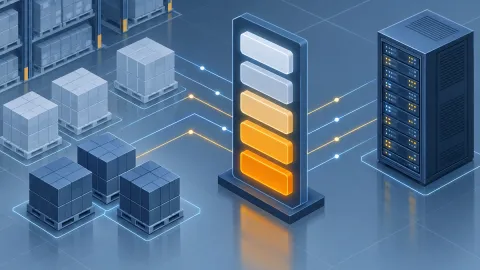
The key word here is orchestration. Modern development in 2026 is no longer about which large language model (LLM) you use. It is about how you coordinate multiple specialized models and agents so that together they can handle tasks that a single model would never process. This approach is described, for example, by the HIX AI platform as a "model-agnostic command center" that automatically selects the best model for each subtask.
When infrastructure is not enough: GitHub suspended new registrations
Proof that this transformation is not a distant vision but an everyday reality came on April 21, 2026. GitHub officially announced the suspension of new registrations for Copilot Pro, Pro+, and Student tiers with a justification that would have sounded like sci-fi just a year ago: "Copilot's agentic capabilities have expanded so quickly that agents are doing more work and more customers are hitting limits designed to maintain service reliability."
The company also tightened limits in individual plans. Opus models disappeared from the Pro tier, with Pro+ remaining the only individual variant with access to the latest models. For developers, this means a fundamental change: it is no longer enough to count the number of queries, but you must monitor token consumption and model multipliers. Long-running parallel sessions — typical for agentic workflows — exhaust the limit faster than simple code completion.
"Cost structures built for lightweight assistance no longer hold up. This is putting pressure on GPU capacity, reliability, and unit economics," commented on the situation for InfoWorld Charlie Dai, vice president and principal analyst at Forrester. His colleague Faisal Kawoosa from Techarc adds that usage regulation will become a "structural feature of the industry" once agentic development becomes common practice.
OpenAI, Anthropic, and the race for your desktop
While GitHub is dealing with capacity, its competitors are pushing the boundaries of what agents can do. On April 16, 2026, OpenAI released a fundamental update to the Codex system, allowing it to directly control desktop applications in macOS. The agent can run in the background, work in parallel across multiple instances, and even schedule future tasks for itself, returning to them without human intervention.
The new version of Codex also brings memory — an opt-in feature that stores the system's preferences, corrections, and context from previous interactions. It also integrates plugins for GitLab, Atlassian Rovo, and Microsoft Suite, making it a universal mediator between code, project management, and corporate documentation.
Anthropic is not left behind either. Its tool Claude Code and the newer desktop agent Cowork allow working directly with files on the computer without the need to program. Similar to Codex, Cowork can browse the code base, perform refactoring, and prepare pull requests with minimal supervision.
Europe is waiting. Czech developers are lagging behind
For the Czech and European developer community, this race for the desktop agent brings one disappointment: European users still have to wait for the Codex update for macOS. OpenAI stated that expansion to the EU will happen "soon," without a specific date. A similar delay also applies to personalization features for Enterprise and Edu users.
Most of these tools still primarily communicate in English. While basic queries in Czech are handled by most models, technical documentation, advanced prompting, and integration with Czech internal systems remain the domain of English. For Czech teams, this means that adopting agentic workflows requires either strong English communication or their own localization layer over the API.
How much does an agentic colleague cost? Prices in times of limitation
The shift from autocorrection to full-fledged agents is immediately reflected in prices. GitHub Copilot Pro remains accessible to existing users at the original price level (approximately 10 USD per month, roughly 230 CZK), but with new limits. The Pro+ tier with larger quotas and access to Opus 4.7 costs significantly more, with the exact amount depending on the region and billing method.
OpenAI Codex is available as part of the ChatGPT Plus/Pro and Enterprise subscription. Anthropic Claude Code is currently part of the paid Claude Pro tiers. An interesting alternative is provided by open-source solutions such as continue.dev or OpenClaw, which allow connecting your own API keys to open-source models and agentic frameworks — this approach is popular in the Czech Republic especially among startups that want to keep costs under control and maintain digital sovereignty.
Precisely the question of digital sovereignty — that is, whether your proprietary code, architectural plans, and strategic documents remain in a sandboxed environment — will be key for Czech companies and institutions, especially in view of the full implementation of the EU AI Act, which classifies systems used in critical infrastructure as high-risk.
Conclusion: Architect instead of glue
Agentic workflows in 2026 do not obscure one reality: developers are not disappearing, but their role is dramatically shifting upward. Tasks that previously occupied 80 percent of working time — manually browsing documentation, copying between dozens of browser tabs, formatting presentations for management — are now being taken over by specialized agents.
At the same time, the need for orchestration and architectural thinking is growing. A person who understands the company context, can formulate the right assignment, and verify agent outputs is more valuable today than ever before. The future of programming is not about writing more code. It is about smarter management of systems that write code for us.
Should I fear agentic workflows as a junior developer?
Not at all. Agents excel at routine and coordination tasks, not at architectural decision-making and creative problem solving. For junior developers, they can even accelerate learning by explaining complex code bases and guiding them through refactoring steps with justification for each change.
How do agentic workflows affect the security of corporate code?
They increase both risks and benefits simultaneously. The risk is the possibility that an agent with broad permissions may inadvertently expose sensitive data via API or insert unverified libraries into code. On the other hand, agents can continuously audit dependencies, detect vulnerabilities, and evaluate license compatibility faster than a human team. The key is careful permission setup and a sandboxed environment.
Can agentic workflows be used in Czech companies without a global IT budget?
Yes. Open-source frameworks such as LangChain, AutoGen, or CrewAI allow building your own agentic workflows on your own infrastructure using cheaper models from DeepSeek, Alibaba, or locally running open-source models. For smaller teams, this is often more economical than paid tiers of large American platforms, although it requires higher initial technical knowledge.