The world of industrial automation is undergoing a fundamental shift. While for the past two years we have been learning how to communicate with chatbots and generate texts or codes, an era is coming where artificial intelligence ceases to be merely an "advisor" and becomes an "operator." The company SAP has just demonstrated this shift with its new tools for supply chain management and manufacturing.
Generative vs. Agentic AI: Why is it a fundamental difference?
To understand the significance of SAP's new development, it is necessary to define the difference between two concepts that are often confused. Generative AI (like ChatGPT, Claude, or Gemini) is excellent at content creation, summarizing documents, or answering questions. However, it is essentially a passive tool – it waits for your query and then generates a response.
Agentic AI goes a step further. An agent is not just a model that "knows," but a system that "does." It has the ability to understand a goal (e.g., "reduce production costs by 5%"), analyze data from various systems, identify the best path, and then actively take steps to achieve that goal. This can include ordering material from a new supplier, changing a production plan, or optimizing logistics routes, without a human having to manually approve each step in the process.
In the context of enterprise systems, this means that an AI agent functions as a digital representative of a manager, who has access to data from production, finance, and logistics and can act on them immediately.
New SAP Tools: Joule and Supply Chain Orchestration
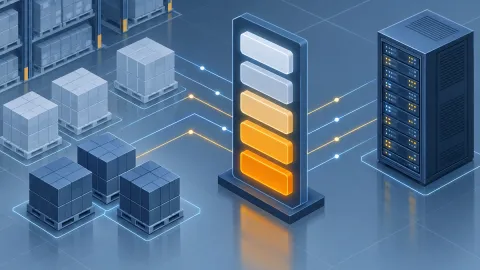
During the presentation in Hannover, SAP focused on integrating AI directly into the core of its processes. The main pillar is SAP Supply Chain Orchestration. This tool utilizes a real-time knowledge graph, allowing the system to understand complex relationships between thousands of suppliers, inventory levels, and production capacities.
At the heart of the entire system is Joule – SAP's intelligent assistant. In its new version, Joule is not just a chat window, but an orchestrator. For example, in response to a sudden change in the supply chain (e.g., a ship delay in port), it can immediately suggest an alternative route or change production priorities in the factory to minimize damage.
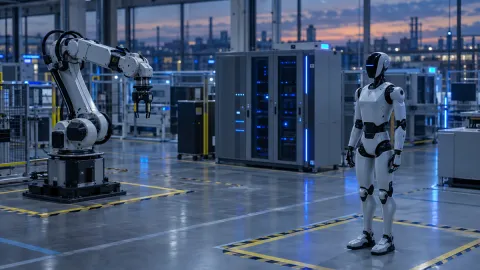
The on-site demonstration also showed the connection between the digital and physical worlds. The system was connected to a **DMG Mori** CNC machine, which produced spare parts that were then automatically transferred to an **Uhlmann** packaging machine. This entire process was controlled by digital instructions that the AI agent optimized based on the current line capacity.
Comparison with Competition
SAP is not the only player in this race. Competitors are adapting very quickly:
- Oracle: Recently introduced 22 agentic AI applications for its Fusion Cloud, focusing on automating core business workflows.
- Blue Yonder: Is expanding its agentic AI tools across the entire supply chain, from planning to customer service.
- UiPath: Together with Deloitte, introduced "Agentic ERP," which combines robotic process automation (RPA) with autonomous agents for orchestrating finance and logistics.
While Oracle and Blue Yonder focus heavily on cloud applications, SAP, thanks to its depth in ERP (Enterprise Resource Planning) systems, has the advantage that its agents have access to the most detailed data about every crown and every gram of material in the enterprise.
Availability, Price, and Impact on the Czech Market
For Czech companies, especially those in heavy industry, automotive, or logistics, this innovation is highly relevant. SAP is a standard in the Czech Republic for large industrial enterprises. The new tools will be available as part of SAP S/4HANA Cloud and the SAP Business Technology Platform (BTP).
Price: SAP does not use a simple "free tier" model like with common AI tools. For enterprises, it's an enterprise SaaS (Software as a Service) model, where pricing is based on data volume, number of users, and modules utilized. For medium-sized Czech companies, this will require an investment in licenses and implementation, but the expected return on investment (ROI) should come through savings in production efficiency and inventory reduction.
Localization: Joule and other agentic tools within SAP are gradually being expanded to include additional languages. Although English is the primary language, support for European languages, including Czech, is crucial in SAP's roadmap for enterprise systems, especially due to integration into local accounting and legal processes.
European Context and Regulation
Security and compliance with legislation are also important aspects. SAP emphasized support for the Manufacturing-X initiative, a European project focused on secure and standardized data exchange among manufacturers in the EU. This is crucial for complying with future regulations, such as the EU AI Act, which places high demands on the transparency and security of AI systems, especially those that make decisions about critical infrastructure.
The implementation of these tools within the EU will therefore not only be about efficiency but also about ensuring the digital sovereignty of European industry, so that companies have full control over how their data circulates within agentic systems.
Can agentic AI in a factory operate completely without human supervision?
No, at the current stage, these systems are designed as "human-in-the-loop." The AI agent proposes actions, analyzes scenarios, and prepares decisions, but for critical processes (e.g., changing a supplier or a fundamental change in production), final approval remains in human hands. The goal is to eliminate routine decision-making, not to replace responsibility.
What are the main risks when implementing agentic AI in supply chains?
The main risks are data quality (if data in the systems is incorrect, the agent will perform an incorrect action) and "hallucinations" in decision-making, where the agent might evaluate non-existent connections. Therefore, integration with platforms like SAP Business Data Cloud and the use of knowledge graphs are crucial for ensuring factual accuracy.
Is this technology also suitable for smaller Czech manufacturers?
Direct implementation of the full SAP ecosystem is more for large corporations. However, smaller manufacturers can benefit from agentic AI through specialized modules or partners (e.g., via integrations into smaller ERP systems) that utilize similar principles of process automation.