When GPU Meets Quantum Computer: Open-Source Ising Models
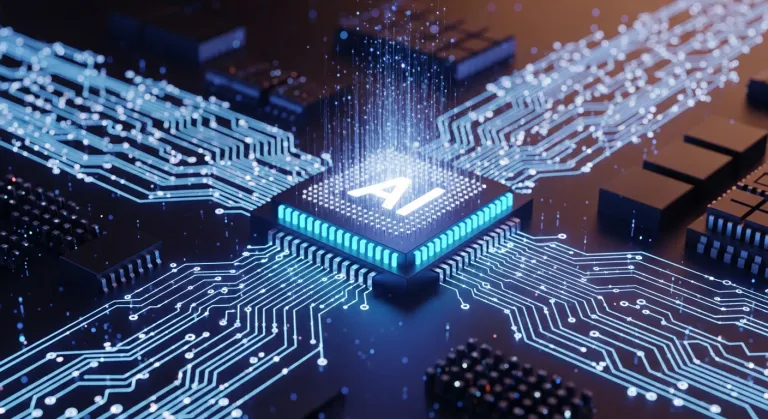
The most significant news from recent weeks is the release of open-source Ising AI models, which NVIDIA has made available to the developer and scientific community. These models function as a kind of bridge between classical graphics processors and early quantum processors. Specifically, these are so-called quantum-inspired models—systems inspired by quantum mechanics that run on current hardware architecture.
For the average reader, this means a simple thing: quantum computers are extremely fragile and programming them is challenging. NVIDIA offers companies developing quantum hardware a ready-made software stack, instead of having to build their own tools from scratch. On NVIDIA Build, the model ising-calibration-1-35b-a3b is already available, which serves to calibrate quantum bits (qubits) across various technology platforms.
For the Czech Republic and Europe, this step has special significance. The EU, within the EuroHPC program, is investing in quantum computers in German Jülich or Finnish Kajaani, and Czech IT4Innovations in Ostrava is also involved in quantum algorithm research. NVIDIA can thus strengthen the European ecosystem with its tools, without users having to acquire expensive specialized licenses from the United States.
Nuclear Energy for AI Factories: A Strategic Bet on the Future
The second pillar of expansion is nuclear energy. NVIDIA announced cooperation with Oklo, which develops advanced nuclear reactors, and with the prestigious Los Alamos National Laboratory. The goal is to create AI infrastructure directly connected to nuclear sources—so-called AI factories that will have their own stable and emission-free energy supplies.
This solution is not coincidental. Current data centers consume so much electricity that some states—including EU members—are beginning to consider regulations on their consumption. For example, Ireland and the Netherlands have already tightened rules for building new data centers. Nuclear energy offers a solution to maintain the exponential growth of AI computations without collapsing the transmission grid.
From a European perspective, it is interesting that the Czech Republic plans to build new nuclear blocks in Dukovany and Temelín. The combination of domestic nuclear energy and advanced AI infrastructure could in the future attract investors to Czech data centers, especially if the EU tightens rules on the carbon footprint of digital services within the AI Act and Green Deal.
Robotics in Operating Rooms: Proximie and Smart OR
The third front that NVIDIA is attacking is medical robotics. Through the Proximie Smart OR platform, NVIDIA technology is getting directly into operating rooms. The system uses AI models and tools for real-time video processing, enabling surgeons to navigate more precisely during operations, analyze tissues, and even receive remote assistance.
Proximie combines computer vision with a cloud platform, so operations can be streamed and analyzed almost instantly. For Czech hospitals and healthcare facilities, this opens the possibility to join global educational networks—experienced surgeons from Motol University Hospital or General University Hospital in Prague could train colleagues abroad or, conversely, receive expert help in real time.
At the same time, questions related to GDPR and the protection of healthcare data arise. Once AI processes images from the operating room, it must be ensured that no sensitive patient data leaves European space. This is an opportunity for Czech security software developers who could create local encryption and anonymization layers for similar systems.
Infrastructure Partners: Nebius, Vultr, and GIGABYTE
NVIDIA is not expanding alone. A key component of the strategy is investments in AI-first cloud providers, such as Nebius—founded by Russians but now an American company—and infrastructure partners including Vultr, Netris, and GIGABYTE. The goal is to ensure that as much GPU capacity and software tools as possible remain in the NVIDIA ecosystem, instead of clients switching to AMD, Intel, or the custom chips of large cloud players.
For Czech companies and startups, this means that choosing a cloud provider with NVIDIA infrastructure will likely remain the safest path to training their own AI models. Czech companies such as ROSSUM or Resistant AI already rely on NVIDIA accelerators today, and a broader offering of partners can reduce the price of renting computing capacity.
What Does This Mean for Investors and the European Market?
From a financial perspective, NVIDIA is entering areas that are heavily regulated and require long-term planning. Quantum computers, nuclear reactors, and medical robotics are not markets where immediate profit can be expected. On the other hand—if partners like Oklo, Los Alamos, or Proximie standardize on the NVIDIA stack, switching costs will increase and competitors like AMD or Intel will have difficulty penetrating.
Analysts point out that NVIDIA already faces criticism regarding high non-cash revenues and risks associated with the concentration of orders from several large customers. Diversification into quantum physics, nuclear energy, and healthcare can change this picture—but it also brings new risks in the form of regulatory delays, export restrictions, or changes in public budgets.
For Europe, the message is clear: the American technology giant continues to strengthen its position in areas where the EU is still finding its own way. While the United States has a clear strategic partnership between the Pentagon, national laboratories, and the private sector, Europe is only now taking shape within EuroHPC and the European Chips Act. The Czech Republic has a chance to get involved through research centers and nuclear infrastructure, but must act quickly.
Which Projects to Watch
By the end of 2026, it is worth watching several specific milestones: the launch of the first commercial calibrations of quantum processors using NVIDIA Ising models, Oklo's progress in licensing nuclear reactors in the USA, and the expansion of the Proximie platform into European hospitals. Each of these steps can indicate how quickly NVIDIA will actually manage to dominate the new markets.
What exactly do NVIDIA's Ising models do?
Ising models are open-source AI tools inspired by quantum physics. They serve to calibrate and stabilize quantum bits (qubits) across different types of quantum hardware. Thanks to this, quantum computer developers can use NVIDIA GPUs instead of their own expensive software solutions.
What is the relationship between nuclear energy and artificial intelligence?
Data centers for training AI models consume enormous amounts of electricity. NVIDIA is collaborating with Oklo on the development of nuclear reactors that could power so-called "AI factories" with stable and emission-free energy. This is especially important in Europe, where pressure is growing to reduce the carbon footprint of digital services.
Can a Czech hospital join the Proximie platform?
Theoretically yes, but it requires meeting strict conditions for the protection of healthcare data under GDPR. Images from the operating room are extremely sensitive, so any cloud solution must guarantee that data does not leave European space. Czech hospitals would therefore have to deploy local encryption or require the system to run on servers in the EU.