In recent months, the world of software development has been going through the era of so-called "vibe coding." Programmers using LLMs (large language models) can generate entire functions just from a description. Yet we still run into one fundamental problem: UI precision. While models like Claude or GPT-4 excel at logic, they often fail when trying to precisely translate a complex design system into clean and structured CSS or React components. This is exactly where Locofy comes in.
What is Locofy and why is it changing workflows?
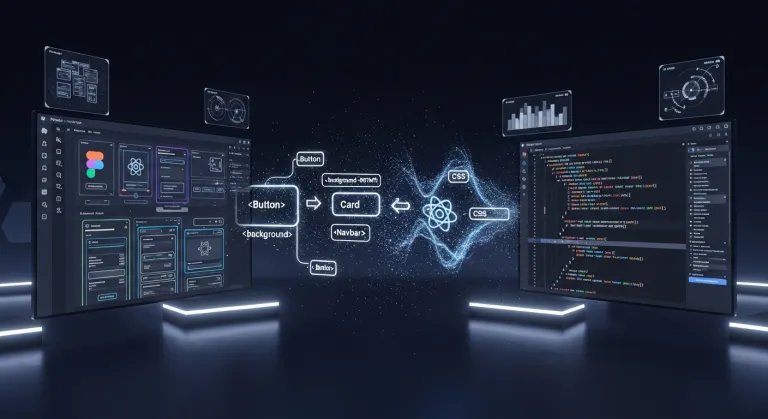
Locofy defines itself as an agentic frontend layer. That sounds technical, but in practice it means the tool works as an intelligent bridge between the visual side (design) and the logical side (code). Unlike older code generators that produced unreadable "spaghetti code," Locofy uses proprietary design-focused models that collaborate with LLMs.
The tool allows you to convert designs from tools like Figma or Penpot directly into development environments. The key innovation is its integration with tools that currently define the cutting edge of AI programming, such as Cursor or Claude Code. Locofy delivers the body (frontend), while these agents deliver the soul (logic).
Supported technologies and frameworks
Locofy is not limited to just websites. Its flexibility is a breath of fresh air for both fullstack developers and mobile developers. The main supported platforms include:
- Web: React, Next.js, Vue, Angular, HTML/CSS, Gatsby.
- Mobile apps: React Native, Flutter.
Comparison: Locofy vs. traditional AI coding
If we were to compare Locofy with pure code generation using models like Gemini or Claude, the difference lies in precision. When you ask Claude to create a "modern registration form based on this screenshot," you get functional but often inconsistent code. You have to manually tweak it, fix margins, and handle responsiveness.
Locofy, on the other hand, works with the original structure of design layers. It ensures that components are modular, meaning the code you get is not just a static image, but real building blocks you can reuse within the project. This is a crucial difference for professional teams that need to maintain a clean technology stack.
Practical impact: What does this mean for Czech companies and developers?
For the Czech scene, which is strongly represented by outsourcing-focused agencies and startups, Locofy represents a huge opportunity to increase margins. Instead of a senior developer spending hours "transcribing" a design into components, these tasks can be delegated to an AI agent.
For small Czech teams and freelancers: It enables faster prototyping. You can send a client a functional app prototype in React much sooner than you could manually, boosting competitiveness on the global market.
For large corporate clients: Locofy solves the problem of security and standardization. Thanks to certifications like SOC2 and ISO (as noted by Navi.tools), the tool is also suitable for companies that place a strong emphasis on data protection and regulatory compliance within the EU.
Pricing
Locofy offers a flexible model typical of SaaS services:
- Free tier: Available for experimentation and smaller projects.
- Hobby & Pro plans: Paid versions for professionals. Currently (as of June 2026), Locofy is offering a special deal — 33% off for 1 year using the code LOCOMEOW when signing up through their website.
Summary: Who is Locofy for?
Locofy is not a replacement for a developer, but rather their exoskeleton. Whether you're a designer who wants to see your visuals come to life in code, or a developer who doesn't want to waste time on CSS layouts, Locofy is a tool that should be in your tech stack.
Can Locofy completely replace a frontend developer?
No. Locofy automates the repetitive part of the work — converting design elements into code and ensuring their structure. Application logic, API integration, and complex state management still require human expertise and decision-making.
Is Locofy available in Czech?
The tool's interface and documentation are in English, which is standard for global developer tools. However, the generated code has no language limitations — you can create apps with a Czech user interface without any issues.
How does it affect data security within the EU?
Locofy meets SOC2 and ISO standards, which are key certifications for enterprise security. For companies operating in the EU, this means the design-to-code transformation process takes place in a secure environment that complies with data management requirements.