What Images 2.6 adds over Images 2.5
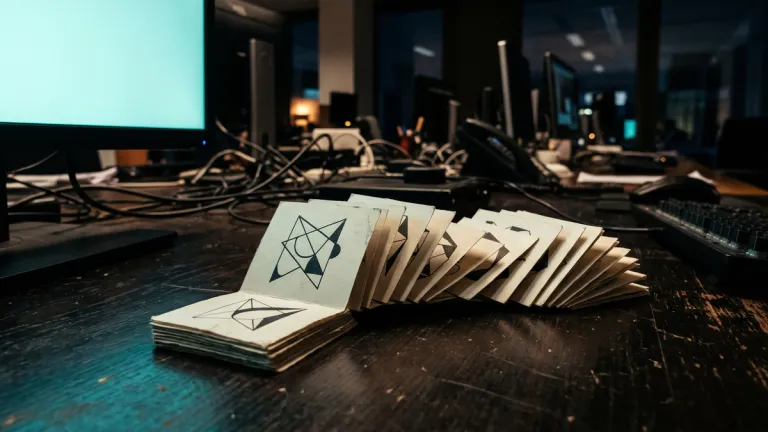
Before this week, a ChatGPT user who wanted motion had to generate a sequence of stills and stitch them together in another program. Images 2.5 was the previous generation; Images 2.6 adds animated output, keeps a character or object consistent from frame to frame, and is meant to speed up image generation overall. The Decoder reports, citing The Verge, that the update is rolling out to all ChatGPT and Codex users on web, desktop and mobile apps. The consistency claim is the interesting part. Animated GIFs made by chaining separate image generations tend to drift: a face changes shape, a jacket changes colour, the hands rearrange themselves. The model's image consistency is strong enough to keep the character recognizable across frames, which is what makes a flipbook-style result usable rather than a curiosity.Frame editing and playback speed
Two controls matter for anyone who has animated anything before. You can inspect and edit individual frames one by one in the chat, and you can adjust the animation speed, The Verge reports. That is a small feature set next to a desktop animation tool, but it moves the correction step into the same window where the GIF was generated. The output is a GIF, not a video timeline. There is no keyframe system, no easing curves and no layer stack. If you need any of those, you still export and continue elsewhere.Two API models: Flare for speed, Sunburst for detail
Developers get the model through two endpoints. GPT-Image-2.6 Flare is the speed-oriented variant and can return an image in as little as 6 seconds at low quality. GPT-Image-2.6 Sunburst is tuned for quality and detail. Both names were first introduced with Images 2.5, and both are available through the API alongside the consumer rollout in ChatGPT and Codex. According to OpenAI, the pair is roughly 50% faster than the 2.5 equivalents. For developers, the split is practical: Flare for iteration, Sunburst for final frames. The speed gain matters because an animation is a sequence of images, so per-frame latency compounds. A six-second low-quality frame is fast for one image; a multi-frame GIF is still a different budget of time. From our side: our AI Arena rig on an RTX 5060 Ti measures tokens per second and time to first token for text models, which is a different measurement from image latency. We cannot check OpenAI's 6-second figure against our own numbers.Roughly 6,600 images a second
OpenAI's own usage numbers show how much of this is already happening. Users generate well over 4 billion images per week via ChatGPT and the API, one billion more than in September. Do the arithmetic and 4 billion a week is about 571 million a day. Spread evenly across 86,400 seconds, that is close to 6,600 images generated every second of every day. The load is not evenly spread, so the real peak is higher. GIF generation multiplies that figure by the number of frames in each animation, which is why faster generation is a capacity story as much as a user-experience story.Availability in the EU and Article 50
The rollout covers ChatGPT and Codex on web, desktop and mobile. Nothing in the launch material points to a regional hold, which is a change from 2024 and 2025, when several multimodal features from major labs were delayed or withheld from the EU while the AI Act and GDPR questions were sorted out. Providers now work from the General Purpose AI Codes of Practice published by the European AI Office, and compliant EU rollouts have become the default. The regulatory obligation that actually touches these GIFs is Article 50 of the AI Act. Since 2 August 2026 it has applied in full: providers must disclose that users are interacting with AI, and synthetic content must be marked in a machine-readable format. The European AI Office and national surveillance authorities now enforce this across borders. In practice, a marketing team in Prague or Berlin that publishes an AI-generated GIF on a product page sits on the deployer side of that rule. Two checks are worth doing before publishing. First, whether the provenance marking survives your export and upload path, since re-encoding a GIF is a good way to lose metadata. Second, whether the caption discloses that the animation is generated, because the human-readable half of the obligation is the one your audience sees. There is a GDPR layer as well. Uploading a photo of a colleague, a customer or a model to generate an animated character means processing personal data, and the model's job is to preserve that person's likeness across every frame. A written internal policy on which photos may be used is cheaper than a complaint.Who this is for right now
For a designer or a social media editor already paying for ChatGPT, native GIF generation removes a step and a subscription. For a developer building an automated pipeline, the practical questions are per-frame latency, consistency across a long sequence, and how the output is marked. For a European company, the compliance work is small but real, and it is the kind of thing that gets skipped when a feature looks like a toy. Before publishing these GIFs on a public page, a team still needs to check what provenance signal travels with the file and whether the caption discloses that the animation is generated.Which of the two API models should I start with?
Flare, if you are prototyping. It is the speed variant and returns low-quality images in as little as 6 seconds, which suits frame iteration. Move to Sunburst when the sequence is fixed and you need detail in the final frames.
Can I generate an animated character from a photo of a real person?
The model is designed to keep a reference likeness across frames, so yes technically. Under GDPR you need a lawful basis for processing that person's image, and a one-off verbal okay from a colleague is weak once the GIF is public. Get consent in writing, or use a generated face instead.
Does the rollout cover Codex as well as ChatGPT?
Yes. The launch material says the GIF feature is rolling out to all ChatGPT and Codex users on web, desktop and mobile apps.