The end of the text-only era? ChatGPT vs. Claude
For the average user in the Czech Republic, the most common interaction with artificial intelligence is through a chat interface. In recent months, we have been watching a constant battle between two titans: ChatGPT from OpenAI and Claude from Anthropic. As ZDNET notes, both models excel at different tasks, but neither is a universal solution for everything.
ChatGPT (available in Czech, with a paid Plus version for approximately $20/month, roughly 460 CZK) remains the standard thanks to its versatility and ecosystem. On the other side stands Claude, which has gained huge popularity thanks to its more natural, less “robotic” writing style and ability to work with very long contexts. Claude is also available to Czech users, with its Pro subscription costing similarly to the competition (approximately $20/month).
The problem, however, is that both of these models are at their core large language models (LLMs). This means their intelligence is based on the statistical probability of word occurrence. Even though they seem incredibly smart, they suffer from a fundamental weakness: they have no concept of physical reality. If you ask them a logical problem that requires spatial reasoning, they can easily mislead you because they do not “see” the world—they only “read” about it.
What are "World Models" and why do they matter?
According to an analysis by Bloomberg, the real technological interest is shifting toward models that can simulate physical laws. While LLMs predict tokens (parts of words), world models predict states of the world.
Imagine the difference between an AI writing text about how a glass falls to the ground, and an AI that actually “knows” the glass must shatter when it hits the floor and that shards will fly in a certain direction. The first is merely symbol manipulation; the second is understanding causality and physics. This very understanding is the key to enabling AI to leave computer screens and enter our homes and factories.
Technology comparison: LLM vs. World Models
| Feature | LLM (e.g., GPT-4, Claude 3.5) | World Models (e.g., Sora, robotic systems) |
|---|---|---|
| Primary goal | Predict the next word/token | Predict the next state of the physical world |
| Basic unit | Text, code, symbols | Video, spatial vectors, physical parameters |
| Main weakness | Lacking spatial reasoning | Enormous computational demands |
Practical impact: What does it mean for you and for the Czech Republic?
This shift has fundamental implications for several areas that will also affect the Czech market:
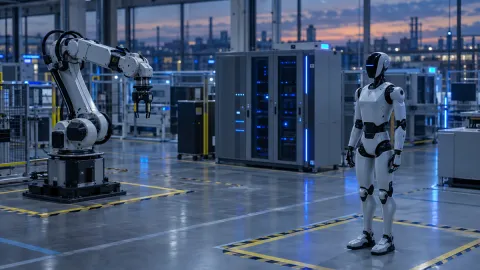
- Industry and automation: For Czech manufacturing companies, this means that future robotic arms in factories will not just be programmed for repetitive movements, but will be able to react to unexpected changes in the environment (e.g., an obstacle or a change in an object's position) thanks to an understanding of physics.
- Logistics: Autonomous vehicles and drones will require world models to safely navigate dynamic urban traffic, where simply “reading” maps is not enough; they must predict the movement of pedestrians and other vehicles.
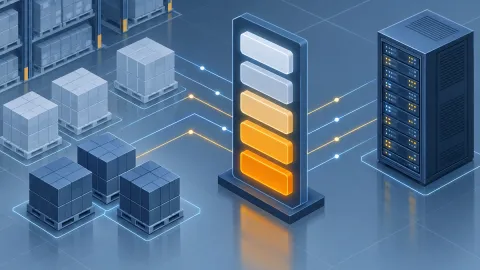
- Companies and software: Software development will shift from writing text to creating complex simulations. Companies will have to invest in infrastructure capable of operating these demanding models.
From the perspective of European regulation (EU AI Act), this shift is also a sensitive point. Models capable of interacting with the physical world carry a higher safety risk. This means that the development of these technologies within the EU will be subject to stricter rules for safety and reliability testing than regular chatbots.
Conclusion
ChatGPT and Claude are incredible tools for working with information, but they are merely “brains in a vat.” The real shift defining the next phase of artificial intelligence development lies in how these systems connect their logic with an understanding of reality. We are witnessing a transition from AI that can talk to AI that can act.
Can I use Claude or ChatGPT in Czech for complex tasks?
Yes, both models handle Czech very well. Claude is often perceived as somewhat more natural in Czech stylistic nuances, while ChatGPT excels at technical instructions and structuring data. For ordinary users in the Czech Republic, both tools are fully available.
Are world models as accessible as chatbots?
No, while chatbots are commonly available as SaaS services (Software as a Service), world models are still mostly in the research phase or are part of specialized systems (e.g., OpenAI Sora for video or research projects for robotics). You will not be able to just “download” them as an app, but their capabilities will gradually be integrated into existing tools.
What is the price for advanced models in the Czech Republic?
Most top-tier models offer a free tier (limited usage), but for professional use a subscription of around $20 (approximately 460–500 CZK) per month is becoming the standard. For companies, there are also enterprise versions with individual pricing based on token consumption or performance.