Why is AI so difficult to grasp for the army?
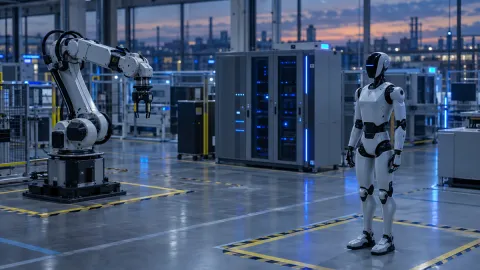
Artificial intelligence is neither a rocket nor a tank. Unlike most military technologies, it does not offer clear and unambiguous use at first glance. It is a whole set of technologies that enable computers to perform tasks that would normally require human intelligence. And just like human thinking, the use of AI is multi-layered, abstract, and requires creativity.
That is precisely why AI can be difficult to grasp in some areas of implementation. NATO armies, including the Czech army, have been working with the capability concept for many years. If we take this concept and carry out an analysis of suitable use of products based on artificial intelligence and machine learning across the main capability areas, we get specific activities suitable for AI deployment.
Where all can artificial intelligence help
According to Brigadier General Mičánek's analysis, the benefits of AI in the army can be divided into several key areas:
Automation of repetitive tasks. Daily press summaries, meeting minutes, regular reports — all of this can be handled by algorithms faster and often more accurately than humans. Staff can thus focus on more complex tasks, administrative burden is reduced, and their expertise is better utilized.
Optimization of processes. AI can identify areas where greater efficiency can be achieved — from planning and organization through acquisition management and supply to optimizing the use of materiel and equipment. Data processing and sorting also improves.
Analysis of big data. Machine learning can process volumes of information that are beyond human capacity. It identifies new trends and patterns of behavior, increases the speed of the analytical phase of the decision-making process, and enables faster reaction to changes. This is critical, for example, for intelligence or crisis management.
Increasing accuracy. Image, signal, or speech recognition has practical use in diagnosing faults in manufacturing and service processes, in training, or in simultaneous machine translations of languages. For the Czech army, which operates in multinational NATO operations, this is a significant benefit.
Cybersecurity and protection of critical infrastructure. AI can significantly increase the resilience of command posts and critical infrastructure against attacks, help in rescue operations, or in crisis management in general.
From audit to pilot projects: five steps to get started
Brigadier General Mičánek proposes a concrete procedure for introducing AI into the Czech Armed Forces. It begins with the recognition that AI implementation must be addressed as a project — and a project always begins with setting a goal, assembling a team, and allocating resources: human, financial, material, and time.
The first step is to develop an audit assessing existing processes and activities in the army, especially their current technological support. This will give us an overview of what type of AI and where it can be advantageously deployed.
The second step should be an AI implementation strategy — not only substantive, but also communication. This means popularizing the goal and benefits of implementation among army members. Here Mičánek points out the Czech disease: most previously produced strategic documents became obsolete immediately upon release because their ongoing communication and updating was not continued.
The third step is pilot projects. It is good to start from simple and proceed to complex — where AI deployment is already proven in civilian applications. "Don't invent anything complex or specific for the Czech Armed Forces requiring demanding development; gradually learn and increase the complexity of projects," Mičánek advises.
The fourth step is personnel education. Creating educational programs in cooperation between the University of Defence and VeV-VA Vyškov with civilian universities and research centers will help increase the success of implementation.
The fifth step is to ensure funding and testing. New technologies built on AI are not cheap in development or operation, and the existing capabilities of the Ministry of Defence may not be sufficient.
European context: EU AI Act and NATO DIANA
While the Czech Armed Forces are addressing internal procedures, the world has not stopped. In March 2024, the European Parliament approved the AI Act — the first comprehensive legal regulation of its kind in the world. For the army, this means new obligations: high-risk AI systems must undergo assessment before market launch and throughout their lifetime, human oversight must be ensured, and citizens have the right to file complaints.
The law bans certain applications, such as biometric categorization based on sensitive characteristics, emotion recognition in the workplace, or social scoring. However, there are exceptions for the army and security forces — for example, biometric identification "in real time" can be used when searching for missing persons or preventing terrorist attacks, but under strict conditions and with judicial authorization.
At the NATO level, the Defence Innovation Accelerator for the North Atlantic (DIANA) was established — an initiative designed to accelerate the transfer of civilian innovations into the military sphere. For the Czech Republic, this opens up the possibility of involving domestic research centers and technology companies in allied projects. At the same time, NATO adopted its artificial intelligence strategy in 2021, which emphasizes interoperability, ethical use, and data protection.
Money and bureaucracy: the biggest obstacles
Brigadier General Mičánek points out several fundamental problems that prevent the rapid introduction of new technologies in the Czech army:
Lengthy procurement proceedings. The Public Procurement Act (No. 134/2016 Coll.) is not suitable for the rapidly evolving IT field. Limited possibilities for directly awarding a project to a single supplier are a problem in the area of breakthrough technologies, because there is often only one truly relevant supplier.
Length of the acquisition process. This is set up for large materiel projects, not IT. "If the duration of selection and subsequent acquisition of new technologies remained at today's values, the army will always be buying an already obsolete product," Mičánek warns. The way forward is to purchase IT products as a service with ongoing upgrades.
Missing communication between the army and industry. There is a clear absence of a platform enabling regular information meetings between representatives of users — soldiers, not just officials — and manufacturers. Mičánek proposes creating an innovation or technology "hub".
We need a Czech DARPA
One of the most interesting proposals in the analysis is the creation of a Czech equivalent of the American organization DARPA. That is, an organization functioning as a technology and innovation "hub" that would examine available breakthrough technologies and their prospects for deployment in the army, and would also be able to test them.
According to Mičánek, such an institution should not be built on the basis of a military unit within the standard hierarchy. It needs a very flat management structure and a flexible governance system similar to civilian development startups. A prerequisite is its own sufficient and stable financial budget, the ability to flexibly carry out purchases and finance projects, as well as the ability to employ and pay the best civilian specialists.
It is an ambitious vision, but in the context of the current race for technological supremacy between superpowers, almost essential. While the USA is investing billions in defense research and China is massively supporting civil-military technology fusion, Europe is balancing between innovation and regulation. For the Czech Republic, which has strong research bases in robotics, cybernetics, and artificial intelligence, this could be an opportunity to find its place — if it can overcome its own bureaucracy.
Conclusion: On paper we know how. What's next?
The Czech Republic has quality experts, universities with research capacities, and industrial companies capable of delivering top technologies. What it lacks is speed of decision-making and willingness to take risks. Brigadier General Mičánek outlined a path in his analysis — from audit through pilot projects to a new innovation institution. The question is whether the political will can be found to walk it.
The EU AI Act, which entered into force in February 2025, and allied initiatives such as DIANA create a framework. It remains to fill it with content. The Czech Armed Forces should not wait until technologies overwhelm it from the outside. The time for first steps is right now.
What is the difference between artificial intelligence and machine learning?
Artificial intelligence (AI) is a broad term denoting systems that mimic human thinking. Machine learning (ML) is one of its subfields — a way for computers to learn from data and improve without explicit programming. In practice, the two terms are often used interchangeably.
Can the Czech army use commercial AI tools like ChatGPT?
Using commercial cloud-based AI tools in a military environment is problematic due to the protection of classified information and cybersecurity. Solutions may be private deployments of open-source models or specialized systems developed for defense purposes.
How will the EU AI Act affect defense projects in the Czech Republic?
The EU AI Act places strict requirements on high-risk systems for assessment, transparency, and human oversight. For defense projects, this means the need to incorporate these aspects already in the development phase. Some applications, such as biometric identification, are subject to special exceptions for security forces.